World Philosophy Day is celebrated on the third Thursday of November, this year on the 21st of November.
Click to Read More: It was established by UNESCO to underline “the enduring value of philosophy for the development of human thought, for each culture and for each individual”.
Moreover they emphasise that “Philosophy is an inspiring discipline as well as an everyday practice that can transform societies. By enabling to discover the diversity of the intellectual currents in the world, philosophy stimulates intercultural dialogue. By awakening minds to the exercise of thinking and the reasoned confrontation of opinions, philosophy helps to build a more tolerant, more respectful society. It thus helps to understand and respond to major contemporary challenges by creating the intellectual conditions for change”.
Read more from the UNESCO World Philosophy Day page here.
In the spirit of this day, we have compiled some of our Philosophy Studies titles below.
Edited by David Henig, Anna Strhan and Joel Robbins
“This is a highly commendable piece of literature that will surely enrich the understanding of the intersection of social theory and philosophy as it relates to the good, and its interdisciplinary approach makes a complex topic both approachable and applicable for a diverse readership.”• Journal of the Royal Anthropological Institute
Edited by Patrick McKearney and Nicholas H. A. Evans
“These anthropological perspectives in akrasia do well to illustrate both the ubiquity of the phenomenon and the need to continue to collect cases of akratic human behaviour. Most normative approaches toward akrasia include aspiring toward its elimination, but collections like this give credence to the idea that akrasia is a mental phenomenon that greases the wheels of daily life.”• LSE Review of Books
Edited by Jennifer Ham, Ulrich Kinzel, and David Tse-chien Pan
Recent devaluations of a liberal arts education call the formative concept of Bildung, a defining model of self-cultivation rooted in 18th and 19th century German philosophy and culture, into question and force us to reconsider what it once meant and now means to be an “educated” individual. This volume uses an arc of interdisciplinary scholarship to map both the epistemological origins and cultural expressions of the pivotal notion of Bildung at the heart of pursuit in the humanities. From its intriguing original historical manifestations to its continuing resonance in current ongoing debates surrounding the humanities, the editors urge us to ask and discover how the classical concept of Bildung, so central to humanistic inquiry, was historically imagined and applied in its original German context.
What Brain–Computer and Mind–Cyberspace Interfaces Mean for Cyberneuroethics
Calum MacKellar
“Calum MacKellar wrote a stimulating book which can be read as a primer covering most aspects of the complex and rapidly growing field of man-computer interactions. The technology will continue to develop, but the ethical problems outlined here will probably remain the same.”• Anthropos
Read freely available introduction, and more with open access.
The German Humanist Tradition and the Future of the Humanities
Alexander Mathäs
“Beyond Posthumanism is a timely intervention into a high-stakes debate on the value of humanist education today. The book situates this debate in a wider historical framework, thereby demonstrating the often overlooked complexity of humanistic concepts. Highlighting literature’s unique ability to serve as a meta-sphere for reflection, this is a comprehensive and thoughtful consideration of one of the great questions of contemporary education.”• Christine Lehleiter, University of Toronto
Executive Editors: For the UKSS John Gillespie, Ulster University Katherine Morris, Mansfield College Oxford
For the NASS T Storm Heter, East Stroudsburg University Constance Mui, Loyola University
Sartre Studies International is a peer-reviewed scholarly journal which publishes articles of a multidisciplinary, cross-cultural and international character reflecting the full range and complexity of Sartre’s own work. It focuses on the philosophical, literary and political issues originating in existentialism, and explores the continuing vitality of existentialist and Sartrean ideas in contemporary society and culture. Each issue contains a reviews section and a notice board of current events, such as conferences, publications and media broadcasts linked to Sartre’s life, work and intellectual legacy.
This year marks the 35th anniversary of the Fall of the Berlin Wall (9 November 1989)!
To celebrate the Fall of the Berlin Wall, we want to spotlight our Books Series on German Studies. These series span further than only our most recent publications, and include a number of Open Access books, entirely free to read! These blog will be looking at…
General Editors: Simone Lässig, Director of the German Historical Institute, Washington, with the assistance of Patricia C. Sutcliffe, Editor, German Historical Institute.
The volumes in this series provide concise introductions to different fields of German-Jewish history with a focus on the topics of politics, society, gender and religion across the last two centuries. Reflecting the latest research developments, these titles are not only valuable resources for scholars but are also accessible to a wider audience. The authors, all experts of German-Jewish history and mostly working at German universities, focus on socio-historical perspectives, including questions of social and cultural history.
The series was first published in German by Schoeningh, now an imprint of Brill. It was edited by Stefanie Schüler-Springorum and Rainer Liedtke on behalf of the Wissenschaftliche Arbeitsgemeinschaft (Academic Working Group) of the Leo Baeck Institute in Germany. The volumes have all been updated for publication in English.
Editorial Committee: Jonathan D. Huener, University of Vermont, Susanna Schrafstetter, University of Vermont, and Alan E. Steinweis, University of Vermont
The University of Vermont has been an important venue for research on the Holocaust since Raul Hilberg began his work there in 1956. These volumes reflect the scholarly activity of UVM’s Miller Center for Holocaust Studies. They combine original research with interpretive synthesis, and address research questions of interdisciplinary and international interest.
Series Editor: Paul Betts (Executive Editor), St. Antony’s College, University of Oxford
Established in 1987 this special St. Antony’s series showcases pioneering new work by leading German historians on a range of topics concerning the history of modern Germany, Europe, and the wider world. Publications address pressing problems of political, economic, social, and intellectual history informed by contemporary debates about German and European identity, providing fresh conceptual, international, and transnational interpretations of the recent past.
The complexities and peculiarities of German history present challenges on various levels, not least on that of historiography. This series offers a platform for historians who, in response to those challenges, produce important and stimulating contributions to the various debates that take place within the discipline.
This series offers books on modern and contemporary Germany, concentrating on themes in history, political science, literature and German culture. Publications will include works in English and English translations of significant works in other languages.
Volume 6
Volume 5
Volume 4
Volume 3
You might also be interested in…
Last month, we created a collection of our most recent German Studies titles for German Unity Day, which you can read here.
Today is Indigenous Peoples’ Day! Berghahn recognizes the significance of indigenous cultures and in the spirit of this day, we have collected some of our relevant titles below.
Performing Knowledge in an Australian Indigenous Community
Franca Tamisari
“This is an excellent exploration and exegesis of Yolngu performance in all its varied forms from ceremonial to popular song and dance … This book is a highly satisfying and compelling read as its penetrating argument utilizes a sophisticated interweaving of theory and ethnography to demonstrate how learning ‘The Law’ is a foundational sense of being in and part of the boneland, (ngaraka), knowing the stories, being able to relate appropriately to kin and country and having the skills, knowledge, rights and ability to perform the songs and dances.”• Fiona Magowan, Queen’s University Belfast.
“This volume is an outstanding piece of scholarship, which, from the standpoint of the processes of creation and creativity, accomplishes, in a good measure, a critique and reassessment of current styles on analyzing Amazonian sociality.”• Juan Alvaro Echeverri, Universidad Nacional de Colombia
Decolonialization and Movements for Environmental Justice
Edited by Jaskiran Dhillon
“Although the essays were already published a while ago, they have not lost any of their relevance, and one can only wish that thanks to the volume being available through Open Access many people will discover this topical publication.”• Amerindian Research
Read freely available introduction, and more with Open Access.
“Through his own life story, Kaniuekutat speaks to many issues of importance facing the Innu in contemporary times, with an eye on tradition and the lessons of the past…A valuable text for students of anthropology, Native studies, and history.” · Choice
Perspectives on the Home, Hearth and Household in the Circumpolar North
Edited by David G. Anderson, Robert P. Wishart, and Virginie Vaté
“Each chapter offers something interesting for the reader…One can list bright and sometimes provocative ideas put forth by each contributor…The main advantage of this book is the ability to spark interest among the most diverse groups of specialists in the field of indigenous cultures.” · Social Anthropology/Anthropologie sociale
“…the articles, taken together, provide an exciting picture of the diversity that is unified in the Nordic region… [and] a significant contribution to the discussion of multiple modernities.” · Scandinavian-Canadian Studies/Études scandinaves au Canada
Personhood, Animals, Plants and Things in Contemporary Amazonia and Siberia
Edited by Marc Brightman, Vanessa Elisa Grotti, and Olga Ulturgasheva
“This thoughtful volume is extraordinarily rich and will prompt all of us interested in these questions to think about them from fresh perspectives.” • Anthropological Forum
“The contributors have made excellent use of recently opened archives and interviews with descendants of the people surveyed to provide a uniquely human portrait of this seminal project. While the chapters focus most thoroughly on the Nenets, Khanty, and Yakut, the analysis is of broader relevance to an understanding of Siberian peoples during the first stages of the sovietization of the Far North. This book will prove of unique value to historians of the Soviet period as well as to cultural anthropologists specializing in polar peoples. Highly recommended.”• Choice
The Complex Relation between Identity and Statistics
Edited by Per Axelsson and Peter Sköld
“This interesting collection looks at changes in population studies and examines indigeneity in contexts as different as Australia and Norway. It is particularly valuable with respect to two broad geographic categories: countries originally settled by British colonists, and states in northern Europe… the study of categorization and enumeration offers valuable insights on how ethnic boundaries are established, and how–inevitably–they are challenged and contested.” · Choice
Childhood, Adolescence and Autobiography among the Eveny
Olga Ulturgasheva
“This thought-provoking and highly original work, relevant especially for students of the anthropology of childhood, supplies an important new chapter to native Siberian ethnography. Highly recommended for anyone seriously interested in today’s Siberia, all levels.” · Choice
“In sum, New Media Nationoffers scholars of minorities, of digital media and of globalizing indigeneities the opportunity to understand how the practices of producing meanings through discourses of resistance contribute over time to the development and re-invigoration of alternative discourses often thought to have been dissolved by the spread of ‘mass media’. By engaging in micro-analyses of specific cultural discourses and their elaboration in specific emergent media situations, Alia alerts her readers to the importance of the complexity of the local.”• Discourse & Communication
“Valuable as an example of the anthropology of development and modernization prevalent in northern Canada at the time, the book transcends this genre in the acuity of its ethnographic analysis and beautifully captures a moment – Henriksen began fieldwork in 1966 – when Mushuau Innu were making the transition to permanent communities… This book is important for Algonquian and circumpolar specialists, as well as for students wishing to understand dynamics of hunting societies in modernity. It has also become significant as a historical record both of the Innu people and of anthropology in northern Canada.” · Journal of the Royal Anthropological Institute
“…a thought-provoking book. Alia lays out the intricacies of Inuit naming so clearly, describes the Arctic environment so vividly, and conveys such a rich sense of Inuit values, concerns, and humour that readers are likely to hunger for more information and to pose ethnographic and on mastic questions that press forward the horizons of Inuit ethnography. Names and Nunavut is a welcome addition to Arctic ethnography and should be of interest not only to linguists and anthropologists working in the Arctic but to anyone interested in the relationship between onomasty, personhood, and cosmology and to anyone looking for fresh insights to the micropractices of linguistic and onomastic colonialism” · NAMES: A Journal of Onomastics
Knowing and Managing Animals in the Circumpolar North
Edited by David G. Anderson and Mark Nuttall
“The edited work contains one of the most interesting sets of northern papers to appear in a very long time…each paper is excellent…this book will hopefully provoke considerable thought…This is a work that should be discussed in terms of the particulars of the various papers, but also for the overview it provides.”– Polar Record
As described by the International Union of Architects, “World Architecture Day (WAD), created by the International Union of Architects (UIA) in 1985, is celebrated annually on the first Monday of October. This day coincides with the United Nations World Habitat Day, aligning the architectural community’s efforts with global urban development goals.”. This year’s theme is ‘Empowering the next generation to participate in urban design’. Read more from their page here.
In the spirit of this day, we have compiled some of our Architecture titles below, spanning across subjects, with free to read introductions.
Bodily, geographic, and architectural sites are embedded with cultural knowledge and social value. This series provides ethnographically rich analyses of the cultural organization and meanings of these sites of space, architecture, landscape, and places of the body. Contributions examine the symbolic meanings of space and place, the cultural and historical processes involved in their construction and contestation, and how they communicate with wider political, religious, social, and economic institutions.
The Yenidze Cigarette Factory of 1909 was constructed as an industrial, architectural object that advertised Dresden as a center for the tobacco trade. Born from a unique client-architect relationship between Hugo Zietz and Martin Hammitzsch, the factory’s importance to modernism has been understated. Smoke and Mirrors uncovers the history of the factory’s planning, design, and construction, and for the first time, apart from the building’s historical narrative, positions this addition to Dresden’s skyline within the formative histories of the modern movement.
Edited by Ulrike Spring, Johan Schimanski and Thea Aarbakke
“This is a fine and rich collection of essays on the topic of the literary museum, notably on the writer’s house museum. It offers engaging perspectives and new horizons that in the international scholarship on this topic will be highly appreciated.”• Harald Hendrix, University of Utrecht
Anthropological Perspectives on Changing Practices of Dwelling and Building
Edited by Jonathan Alderman and Rosalie Stolz
“An interesting and worthwhile collection, covering a wide range of different themes relating to change and transformation related to the house.”• Monica Janowski, University of London
Architecture, Material Culture and the Workhouse under the New Poor Law
Charlotte Newman and Katherine Fennelly
“This is an excellent and fascinating examination of how archaeology can inform the study of poverty in nineteenth century England. The work takes as its focus the exploration of workhouses and how the analysis of the built material culture can aid our understanding of them. It exemplifies the value of using detailed case studies to interrogate and critique national models and understandings of social experience. To tell, what Hicks and Beaudry have called, ‘stories that matter’.”• Matthew Jenkins, University of York
“While there has been an exponential growth in the literature on refugees and forced migration over the past decade, the issue of shelter has received very little attention. This volume fills that important gap in an admirable manner.”• Jeff Crisp, University of Oxford
Edited by A.-Chr Engels-Schwarzpaul, Lana Lopesi, and Albert L. Refiti
“The authors make an important contribution to understanding spatial relationships within indigenous communities. The book highlights an important, and often overlooked, connection between space, time, and the built environment by breaking the disciplinary bounds that often confine our understandings.”• Jamon Alex Halvaksz, University of Texas at San Antonio
Nordic Maritime Museums’ Portrayals of Shipping, Seafarers and Maritime Communities
Annika Bünz
A characteristic trait of the maritime museums is that they are often located in a contemporary and/or historical environment from which the collections and narratives originate. The museum can thereby be directly linked to the site and its history. It is therefore vital to investigate the maritime museums in terms of relationships between landscape, architecture, museum and collections. This volume unravels the kinds of worlds and realities the Nordic maritime museums stage, which identities and national myths they depict, and how they make use of both the surrounding maritime environments and the architectural properties of the museum buildings.
National Narratives, Monument Preservation and Architectural Work in the Nineteenth Century
Edited by Dragan Damjanović and Aleksander Łupienko
“The book Forging Architectural Tradition is an excellent contribution for anyone interested in the creation of national narratives around architectural buildings. It is suitable for architects, art historians, historians, sociologists, cultural researchers, and the general cultural public, as well as anyone interested in the national narratives of ‘small’ nations. The topics explored in the book should not be viewed as a part of the distant past but as still current as the historical processes described in the book can help us deal with problems related to the politicization of heritage that is still evident today.”• Prostor
Poetry, Architecture, and Coloniality at the Open City
Maxwell Woods
“At the heart of the project are the politics of avant-gardism and of the brutally repressive dictatorship of General Augusto Pinochet. Though not an easy read, this is certainly a volume that specialists in visionary experiments of the 20th century will want to take into account…Recommended.”• Choice
German Unity Day is celebrated on October 3rd.Tag der Deutschen Einheit celebrates the 1990 reunification of the Federal Republic of Germany and the German Democratic Republic with ceremonial acts and the citizens’ festival Bürgerfest.
In the spirit of this day, we have compiled some of our German Studies titles below.
Germany has undergone more change in the past two years than it has experienced in decades. In the fall of 2021, the Social Democratic Party unexpectedly surged to first place in the Bundestag elections, going on to lead a coalition of SPD, Greens, and Free Democrats that promised to “dare more progress” domestically. Then just two months after the new government was installed, Russia invaded Ukraine. The contributions in this volume investigate the altered state of German politics and predict the trajectory of Europe’s leading power in the transformed geopolitical environment.
Intimate Histories focuses on intimate relations as sites of shared pasts connecting African American and German history in the years between 1933 and 1990. By tracing topics that include anti-miscegenation laws, forced sterilization, casual sexual encounters, marriage, and friendships, Intimate Histories broadens our understanding of African American–German relations during the so-called “century of extremes.”
Western Culture in East Germany and the Fall of the Berlin Wall
Gerd Horten
“Horten has written a fascinating, very readable, analytically sharp monograph, based on an impressive amount of primary and secondary sources… The average East German, not the few dissidents or the few fanatics on top, are the real heroes of his narrative.”• H-Soz-Kult
Conspicuous Reproduction and Childlessness in Reunified Berlin
Meghana Joshi
“There are some unique and important discussions [in this book] that I have not seen elaborated elsewhere and certainly not brought together in one place.”• Heide Castañeda, University of South Florida
German Division as Shared Experience Interdisciplinary Perspectives on the Postwar Everyday Edited by Erica Carter, Jan Palmowski, and Katrin Schreiter
“All told, this volume successfully brings together its fascinating chapters into a powerful interdisciplinary analysis. German Division as Shared Experience is a significant achievement that will serve as a bedrock for future research on the ‘entanglement’ of the Cold War Germanies. The editors and contributors have produced a genuinely pathbreaking book.”• The Journal of Modern History
Women’s Stories of Power, Politics, and Everyday Life across East and West Germany
Phil Leask
“Beginning and advanced students can learn much from this highly readable book. Its bottom-up view of postwar German history is revealing even to the expert. Its subtle and perceptive interpretations of attitudes about gender and womanhood, Heimat and the German past, politics and everyday life are enlightening. It provokes one to think about friendship, the psychology of groups, and ageing in new and refreshing ways. A most worthwhile read.”• German History
“This is an important book crafted by a master of intellectual history. It will be widely consumed and discussed among German historians and a wide range of intellectuals interested in the origins of the modern surveillance state. Essential.”• Choice
Organizational Culture and Practice of Rule in the Socialist Unity Party of Germany
Rüdiger Bergien
Everyday life in the East German Socialist Unity Party revolved heavily around maintaining the “party line” in all areas of society, whether through direct authority or corruption. Spanning a long period of the GDR’s history, from 1946 through 1989, Rüdiger Bergien presents the first study that examines the complexities of the central party’s communist apparatus. He focuses on their role as ideological watchdogs, as they fostered an underbelly and “inner life” for their employees to integrate the party’s pillars throughout East German society. Inside Party Headquarters reviews not only the party’s modes power and state interaction, but also the processes of negotiation and disputation preceding formal Politburo decisions, advancing the available detail and discourse surrounding this formative and volatile stretch of German history.
“These impressively researched chapters persuasively demonstrate that France was a leader in addressing postwar concerns with West Germany. Furthermore, the authors argue that France sought a constructive relationship with West Germany as early as 1945. From the economic rebuilding of the 1950s through de Gaulle’s desire to transform the continent and negotiations with the Eastern bloc following Ostpolitik to Mitterand’s support for German reunification within a European framework, this collection makes clear that the fates of the two countries were often inextricably linked. Highly Recommended.”• Choice
Political Languages of Conservatism in Britain and West Germany, 1945-1980
Martina Steber
Since 1945, what ‘conservative’ means has troubled intellectuals, politicians and parties in the United Kingdom and West Germany. In Britain conservatism was an accepted term of the political vocabulary, denoting a particular tradition of political thought and practice. In West Germany, by contrast, conservatism was a difficult concept for the young democracy to swallow. It carried a heavy antiliberal and antidemocratic burden and led people to question whether there was a place for conservatism within democratic culture after all.
The Guardians of Concepts scrutinizes the debates about conservatism in the UK and the Federal Republic of Germany from the late 1940s to the early 1980s. Informed by historical semantics, it conceives of conservatism as a flexible linguistic structure, and shows the importance of language for the self-understanding of many conservatives, who not by chance, have regarded themselves as the guardians of concepts. The intense national and transnational debates about the meaning of conservatism had far-reaching consequences and continue to influence politics today.
“This story is so far little known and not a big topic of the German public. Ilko-Sascha Kowalczuk closes our knowledge gaps in an impressive way”• Frankfurter Allgemeine Zeitung
“This book is important because it opens avenues of research into queerness in East Germany’s National People’s Army (NVA)… Smith’s book is commendable for breaking barriers in masculinity studies and offering a refreshing second look at the NVA… Highly Recommended. All readers.”• Choice
Edited by Karen Hagemann, Donna Harsch, and Friederike Brühöfener
“This volume achieves a tremendous feat in its breadth, though its forte lies in its diverse contexts, uses, and understandings of gender—including its co-constituency with race and sexuality… This collection offers a much-needed re-narrativization of a divided Germany that centers gender, race, and sex in the shaping of citizenry during postwar nation-making.”• Feminist German Studies
Selves and Solidarities in West Germany and Beyond
Edited by Belinda Davis, Friederike Brühöfener, and Stephen Milder
“A volume on social movements in the 1970s and 1980s is very welcome and timely. Now that there exists a solid corpus of monographs on the Long Sixties, serious research on the 1970s is slowly beginning to see the light of day – less so on the 1980s. Thus, Rethinking Social Movements after ’68 will begin to fill a growing need.”• Gerd-Rainer Horn, Sciences Po
“…the range and rigour make this handbook a useful point of entry for specialists and students alike interested in understanding the transformation of Germany in the last half century.”• European History Quarterly
“Gieseke treats… many issues with careful and lucid analysis, confining himself to the known facts. He rejects the hyperbolic in favor of more mundane explanations. The truth is bad enough… Essential.”• Choice
“…constitutes a superlative model of combining biography with the study of nationalism. The latter constitutes the most novel contribution of this well-researched, straightforward historical depiction of Kohl’s ideology and its impact upon the continuing development of German national identity… Recommended” · Choice
Editor: Jeffrey J. Anderson, Georgetown University
German Politics and Society is a joint publication of the BMW Center for German and European Studies (of the Edmund A. Walsh School of Foreign Service, Georgetown University) and the German Academic Exchange Service (DAAD). These centers are represented by their directors on the journal’s Editorial Committee.
German Politics and Society is a peer-reviewed journal published and distributed by Berghahn Journals. It is the only American publication that explores issues in modern Germany from the combined perspectives of the social sciences, history, and cultural studies.
The 27th of September is World Tourism Day, and the United Nations’ theme in 2024 is “Tourism and Peace” to highlight the capacity for tourism to bridge connections and understandings between nations and cultures.
As the United Nations’ page describes it:
Tourism, often highlighted for its role in economic development, also plays a significant role in fostering peace. On a global level, where nations are interconnected and interdependent, Tourism, an industry made by people and for people, emerges as a compelling and dynamic force to defy stereotypes and challenge prejudices.
This sector can be perceived as the epitome of intercultural dialogue; it allows meeting the “other”, learning about different cultures, hearing foreign languages, tasting exotic flavours, bonding with other human beings, and building tolerance. In essence, it is a mind-broadening educational and spiritual experience.
“The Mediterranean … has been shaped by the migration phenomena related to the colonial history and more recently to the crisis of receiving refugees – the author skillfully maneuvers through the history of the region’s multiple mobilities and connectivities … My overall opinion about the book is very positive.”• Natalia Bloch, Adam Mickiewicz University, Poznań
Ecotourism, Local Knowledge, and Nature Therapies in Okinawa
Andrea E. Murray
“… a wonderful ethnographic work…As readers navigate through shared narratives and collective histories, they cannot help but feel they are immersed within the Okinawan culture. Libraries with anthropological collections focusing on Pacific Island studies (with a primary focus on Japan) or cultural heritage tourism should have a copy of this work. Highly recommended.”• Choice
Universal Discourse, National Culture, and Local Memory
Haiming Yan
“This book brings a wealth of information and spirited discussion to a wide readership and could readily be considered for courses on heritage issues in Asia and globally.”• Asian Perspectives
“Martin Thomas and Amanda Harris’s edited volume makes important steps towards understanding the history of the sociopolitical formations that are embedded in, and around, the idea of the expedition.”• Journal of the Royal Anthropological Institute (JRAI)
“Because the essays represent a variety of disciplines—among them literature, history, and anthropology—the book offers a refreshing view of the field as a whole…Highlights include Wendy Bracewell’s insightful take on masculinity and the Balkans (via work ranging from Sara Mills’s to Moma Dimić’s) and Keith Newlin’s unvarnished examination of Jack and Charmian London’s insular journey to Melanesia. This engaging and useful text should invigorate both new and seasoned scholars of the genre….Recommended”• Choice
Edited by Neriko Musha Doerr and Hannah Davis Taïeb
“Overall, this edited volume illustrates the complexities of affective encounters as students and young volunteers cross borders and engage with cultural diversity. Important is the relevance of understanding, studying, and acknowledging how affect impacts subject-making as students travel. There are also important insights that allow practitioners, teachers and programme co-ordinators to think strategically about how to better direct or address affective encounters in more meaningful and productive ways.”• Journal of the Royal Anthropological Institute (JRAI)
“Doerr’s work makes a unique contribution to the international education scholarship by grouping together the key terms supporting the dominant discourse and putting them under the spotlight for a closer examination. For easy practical reference, the author chooses to focus on one term in each chapter. While using theories to expose the study abroad clichés, the author manages to keep her language simple and easy to understand.”• McGill Journal of Education
“Salazar’s book is immensely readable because he is not held back by writing regular academic prose. Momentous Mobilities, true to its subtitle, is an intense and meditative musing on the subject. It will be valuable to sociologists, anthropologists, scholars of migration, and non-specialists alike.”• JRAI
Tourism, Space, and National Identity, 1945 to the Present
Gundolf Graml
“Gundolf Graml’s book presents a fresh, enterprising assessment of the role played by tourism in the construction of ‘Austrianness’ under the Second Republic…[It] offers much to mull over and invigorates both tourism and Austrian history with new approaches.”• Journal of Austrian Studies
“Tourism and Informal Encounters in Cuba offers useful material for academics such as ethnographers and sociologists and researchers in the business community, but also for politicians, tourists, and commercial enterprises to understand the nature and impact of the “Cuban hustler.” Well grounded in academic theory, it draws on prior investigations as well as the author’s own experiences over a ten-year period in Cuba.”• New West Indian Guide
Edited by Garth Lean, Russell Staiff, and Emma Waterton
“This is a well-written book that disentangles, through sound interdisciplinary scholarship, the multiple workings of travel representations, their effects on people, and their limits…[It] is definitely recommended reading for graduate students and scholars with an interest in how travel, including tourism, is represented and how both travel and its representations mutually influence each other.”• JRAI (Journal of the Royal Anthropological Institute)
Development, Tourism and the Politics of Benevolence in Mozambique
João Afonso Baptista
“What the book offers most is a rich, detailed, and highly personal account of how everyday life is experienced within a community centred on a developmentourism project. It also offers a valuable source of reflection on the process and challenges of doing ethnographic research, particularly in postcolonial settings. In this way, it stands as a useful ethnography to illustrate discussions of tourism, development, community, participation, governance – many of the concepts central to our teaching and whose complexity we often find so difficult to convey to students.”• Anthropos
Edited by Noel B. Salazar and Nelson H. H. Graburn
“This book establishes ‘imaginaries’ as part of the conceptual apparatus of the anthropology of tourism [and] contributes to social anthropology more generally by exploring how tourism imaginaries intersect with broader cultural and ideological structures… The wealth of its ethnography, combined with its innovative conceptual approaches, exemplifies the strengths anthropology is bringing to interdisciplinary tourism studies.”· Journal of the Royal Anthropological Institute
“The volume’s scope suggests how daunting the editors’ task was, and they do a credible job, addressing issues ranging from governmental policy to heritage tourism to the possibilities of virtual tourism in the 21st century. This is a good introduction to the subject… what the authors do accomplish is significant, particularly for comparative tourism studies…Highly recommended.” · Choice
For more content, you can browse our Travel and Tourism subject page here.
Berghahn Journals
JOURNEYS The International Journal of Travel and Travel Writing
Journeys ceased publication in 2022. All articles we currently publish for the journal, since 2000, are Free Access in order to ensure their ongoing availability.
Journeys is an interdisciplinary journal that explores travel as a practice and travel writing as a genre, reflecting the rich diversity of travel and journeys as social and cultural practices as well as their significance as metaphorical processes. The dual focus on experience and genre makes Journeys unique among scholarly journals concerning travel and is intended to draw into conversation scholars in such varied disciplines as anthropology, literary studies, social history, religious studies, human geography, and cultural studies.
The 21st of September is the International Day of Peace, established by the United Nations in 1981. This year marks the 25th anniversary of the General Assembly adopting the Declaration and Programme of Action on a Culture of Peace.
As the United Nations’ page describes it:
This year marks the 25th anniversary of the United Nations General Assembly’s adoption of the Declaration and Programme of Action on a Culture of Peace.In that declaration, the United Nations’ most inclusive body recognized that peace “not only is the absence of conflict, but also requires a positive, dynamic participatory process where dialogue is encouraged and conflicts are solved in a spirit of mutual understanding and cooperation.”
In a world with rising geopolitical tensions and protracted conflicts, there has never been a better time to remember how the UN General Assembly came together in 1999 to lay out the values needed for a culture of peace. These include: respect for life, human rights and fundamental freedoms; the promotion of non-violence through education, dialogue and cooperation; commitment to peaceful settlement of conflicts; and adherence to freedom, justice, democracy, tolerance, solidarity, cooperation, pluralism, cultural diversity, dialogue and understanding at all levels of society and among nations.In follow-up resolutions, the General Assembly recognized further the importance of choosing negotiations over confrontation and of working together and not against each other.
The Constitution of the United Nations Educational, Scientific and Cultural Organization (UNESCO) starts with the notion that “wars begin in the minds of men so it is in the minds of men that the defences of peace must be constructed”. It is this notion that framed the theme and logo of this year’s observance of the International Day of Peace. The ideas of peace, the culture of peace, need to be cultivated in the minds of children and communities through formal and informal education, across countries and generations.
The International Day of Peace has always been a time to lay down weapons and observe ceasefires. But it now must also be a time for people to see each other’s humanity. Our survival as a global community depends on that.The International Day of Peace was established in 1981 by the United Nations General Assembly. Two decades later, in 2001, the General Assembly unanimously voted to designate the Day as a period of non-violence and cease-fire.
Information taken from the UN’s page, for more details, please read more here.
In the spirit of this day, we have compiled some of our latest titles looking at peace studies below.
For more content, you can browse our Peace and Conflict Studies subject page here.
Edited by Laurence Badel, Eckart Conze, and Axel Dröber
For more than a century, the Paris Peace Conference of 1919 has remained an object of historical scrutiny. As an attempt to consolidate peace in the wake of World War I and to prevent future conflict, it was instrumental in shaping political and social dynamics both nationally and internationally. Yet, in spite of its implications for global conflict, little consideration has been given to the way the Paris Peace Conference constructed a new global order. In this illuminating and geographically wide-ranging reassessment, The Paris Peace Conference of 1919 reconsiders how this watershed event, its diplomatic negotiations and the peace treaties themselves gave rise to new dynamics of global power and politics. In doing so it highlights the way in which the forces of nationality and imperiality interacted with, and were reshaped by, the peace.
Catholic Intellectuals, Journalists, and Media in Postwar Polish–German Reconciliation
Annika Elisabet Frieberg
“This knowledgeably written study succeeds in exemplarily reopening a conceptual approach that is important for international relations on a hitherto rather neglected source basis and providing important insights for the understanding of both discourses of reconciliation in general and the history of German-Polish relations in particular.”• Jahrbücher für Geschichte Osteuropas
Physical Violence in East-Central Europe, 1917–1923
Edited by Jochen Böhler, Ota Konrád, and Rudolf Kučera
“Overall, the volume offers a broad panorama of the history of violence in East Central Europe. The individual essays are thematically diverse and offer an excellent synthesis of multilingual sources of research literature and theory.”• H-Soz-Kult
Edited by Nevra Biltekin, Leos Müller and Magnus Petersson
“This generous collection of essays portrays salient aspects of Sweden’s policy of neutrality throughout the last 200 years. A truly stimulating read including splendid and sometimes thought-provoking interpretations. The book deserves international attention.”• Rasmus Mariager, University of Copenhagen
Challenges with Implementing Global Norms for Internally Displaced Persons in Georgia
Carolin Funke
“I really enjoyed reading this monograph…. This book is much more than area studies research on Georgia as this volume is likely to bear theoretical implications generalizable beyond the Georgian case study. Empirical data collected through ethnographic participant observation, elite interviews, and focus groups is rich and fascinating.”• Huseyn Aliyev, University of Glasgow
Willy Brandt, Ostpolitik and the Quest for European Peace
Benedikt Schoenborn
“Maybe the parties involved in negotiating an end to the war in Ukraine can revisit some of Brandt’s creative thinking and personal gestures as inspiring examples for the beginnings of a new reconciliation. They can use Benedikt Schoenborn’s excellent study of reconciliation and Ostpolitik as their guide.”• H Diplo
Historical, Legal, Anthropological and International Perspectives
Edited by Karl Härter, Carolin Hillemanns and Günther Schlee
“A very nice compilation of interesting articles on mediation and related practices of third-party conflict regulation from various perspectives, including legal, anthropological, sociological, historical, psychological and philosophical perspective.”• Daniel Girsberger, University of Lucerne
Personhood, Nationhood, and the Post-Conflict Moment in Rwanda
Laura Eramian
“This is richly detailed and an often startling ethnography with sharp insights and resonance for learning about post-conflict moments and the potential future for settings within, and far beyond, modern Rwanda.”• Conflict & Society
2019 CANADIAN ANTHROPOLOGY SOCIETY LABRECQUE-LEE BOOK PRIZE HONORABLE MENTION
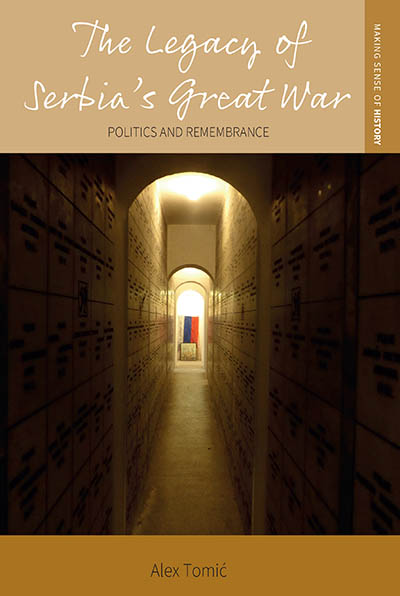
Alex Tomić discusses her new book, The Legacy of Serbia’s Great War: Politics and Remembrance, which examines the centenary events memorializing the First World War with the retreat at its core and provides a persuasive account of the ways in which the remembrance of Serbian history has been manipulated for political purposes.
I started researching the remembrance of the First World War in Serbia in the run up to the centenary, just over ten years ago. Apart from reading, classifying and analysing, I also needed to visit some of the sites of remembrance, attend ceremonies, museum openings, concerts… whatever I was able to manage while working full-time in the Hague. My husband (was) volunteered as a travelling companion so for the next few years our holidays were spent visiting First World War monuments, usually located at military cemeteries. Apart from places in Serbia and Greece, we also visited memorial sites in France, Belgium, Slovenia, Italy and the Netherlands (although the Netherlands was neutral, there is a twist in Chapter 8 …). Some trips stand out.
German Unity Day is celebrated on October 3rd.Tag der Deutschen Einheit celebrates the 1990 reunification of the Federal Republic of Germany and the German Democratic Republic with ceremonial acts and the citizens’ festival Bürgerfest.
Berghahn Books has been a rigorous peer-reviewed press since its inception in 1994 and has always considered this essential both for assuring the quality and scholarship of our titles but also for providing insightful feedback for our authors to enable them to improve, refine and develop their work. Supporting early career academics is an important part of our mission and the constructive guidance that is offered by skilled peer reviewers can often be vital when developing a first publication. We extend our deepest appreciation to peer reviewers for their tireless commitment to ensuring the high quality of academic research in general and for the support and contribution they make to our publishing programme at Berghahn Books.
Mark Stanton, Books Editorial Director
To celebrate Peer Review Week, Berghahn Books coordinated several interviews with authors, series editors and journal editors to explore what their views of our process are and to thank our peer reviewers for the valuable work they do.
An interview with Howard Louthan and Roberto E. Barrios
 Join our Email List